What Does Solus Christus Mean? Why Christ Alone Saves
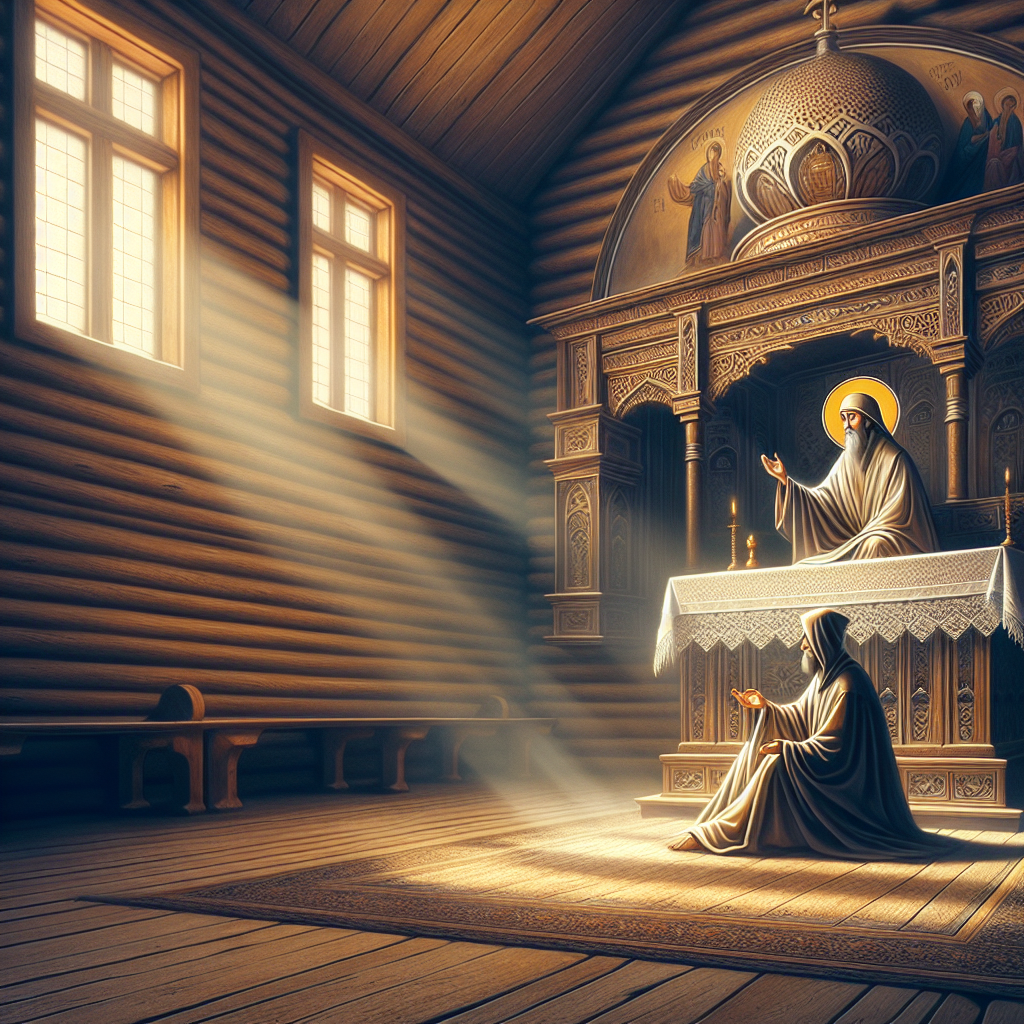
A few years ago I spent an embarrassing amount of time trying to fix a leaky kitchen faucet with three different YouTube tutorials open at once, because apparently there are seventeen kinds of cartridge valves and mine matched none of them. Eventually I gave up and called a plumber, who fixed it in four minutes and charged me for an hour, which felt about right. Here's the thing: I didn't need seventeen partial solutions. I needed the one person who actually knew what he was doing. That's roughly the whole argument for Solus Christus — Christ alone — and I promise the theology is more interesting than my faucet.
What "Solus Christus" Actually Means
Solus Christus is the fourth of the Reformation's five solas, and it's the one that gets the least airtime, probably because "Christ alone" sounds obvious to anyone who already calls themselves a Christian. Of course Christ saves. Who else would?
But the Reformers weren't arguing against atheists. They were arguing against a medieval system that had, over centuries, quietly added a lot of middlemen: priests who alone could administer saving grace through the sacraments, a treasury of merit built up by especially holy people that could be transferred to you (for a price), and Mary and the saints functioning as co-mediators you'd appeal to on your way to God. None of that was presented as replacing Christ. It was presented as access to Christ — a chain of assistance between you and the Savior.
Solus Christus cuts the chain. 1 Timothy 2:5 says it plainly: "For there is one God, and there is one mediator between God and men, the man Christ Jesus." One. Not one primary mediator with helpful sub-mediators. One.
The Threefold Office
Reformed theology usually unpacks Solus Christus through what's called Christ's threefold office — prophet, priest, and king — borrowed from Old Testament roles that pointed forward to him.
As prophet, Christ is the final and complete revelation of God (Hebrews 1:1-2) — which is why Sola Scriptura and Solus Christus aren't in tension, by the way. Scripture doesn't compete with Christ for authority; it's the record of the one who is the Word.
As priest, he offers the one sacrifice that actually deals with sin — himself — and then, unlike every Old Testament priest, he doesn't die and need replacing. Hebrews 7:24-25 says he holds his priesthood permanently, "since he always lives to make intercession" for those who come to God through him. No successor. No vacancy to fill.
As king, he rules — not someday, not merely spiritually, but now, having been given "all authority in heaven and on earth" (Matthew 28:18). A king doesn't need a regent standing in for him while he's away, because he isn't away.
Look — I struggled with this section for a while, honestly, because "threefold office" sounds like exactly the kind of scholastic category that makes people's eyes glaze over in a systematic theology class. But once it clicked, it reframed the whole doctrine for me: Solus Christus isn't a rule about which doctrines to affirm. It's a description of what Christ is actually doing, right now, without a supporting cast.
The Honest Counterargument
Here's the strongest version of the objection, because it deserves better than a straw man: doesn't the Bible talk about the church as Christ's body, ministers as under-shepherds, and believers praying for one another? Doesn't that mean other people genuinely do mediate grace to us in some sense?
Yes — and this is the part that took me years to see clearly. Reformed theology doesn't deny that God works through means: preachers, sacraments, the prayers of the saints, the encouragement of a friend who shows up with a casserole during a hard month. What it denies is that any of those means possess or dispense saving grace on their own authority, as if the pastor or the sacrament were an independent source you needed alongside Christ rather than a channel Christ uses to deliver what only he provides. Your friend's casserole doesn't save you. But God, through ordinary means like a friend showing up, sustains you toward the one who does.
Why This Still Matters
You don't hear a lot of transferable-merit theology at the grocery store these days, so it's fair to ask whether Solus Christus is still a live issue or just Reformation trivia. I'd argue it's more relevant than ever, just wearing different clothes. Every generation invents its own mediators: a certain program, a certain leader, a certain level of spiritual performance you're supposed to hit before you feel qualified to approach God directly. Solus Christus says none of that stands between you and him. Not your pastor, not your Bible-reading streak, not the guy on the podcast with all the answers.
Solus Christus is one of the Five Solas — see also Sola Scriptura, Sola Fide, Sola Gratia, and Soli Deo Gloria.
Key Takeaways
- Solus Christus means Christ alone is the mediator between God and humanity — not one mediator among several helpful others.
- The Reformers weren't rejecting the idea that God uses means; they were rejecting the idea that those means have independent saving authority.
- Christ's threefold office — prophet, priest, king — describes a role he holds completely and permanently, without a supporting cast.
- The doctrine still confronts every generation's tendency to build new intermediaries between people and God.
Is there something — a person, a program, a private standard — you've quietly let stand between you and direct access to Christ?
Further Reading
- John Calvin, Institutes of the Christian Religion, Book II
- Michael Reeves, Rejoice and Tremble / Christ Our Life
- R.C. Sproul, The Truth of the Cross
Frequently Asked Questions
What does Solus Christus mean?
Solus Christus is Latin for "Christ alone" — one of the Reformation's five solas, teaching that Jesus Christ is the only mediator between God and humanity, with no need for additional intercessors.
Is Solus Christus in the Bible?
Yes — 1 Timothy 2:5 states there is "one mediator between God and men, the man Christ Jesus," and Hebrews 7:24-25 describes Christ's permanent priesthood, both foundational texts for the doctrine.
Does Solus Christus mean pastors and prayer don't matter?
No. Reformed theology affirms God works through means like preaching and prayer, but insists those means carry no independent saving authority — they only deliver what Christ alone provides.
How is Solus Christus related to the other four solas?
It sits alongside Sola Scriptura, Sola Fide, Sola Gratia, and Soli Deo Gloria as one of the five pillars the Reformers used to describe salvation as entirely God's work, mediated through Christ alone.
About the Author
Enjoyed this? Support the writers keeping CrazyChurch.net running and spreading the word.
Buy Us a Coffee